Description
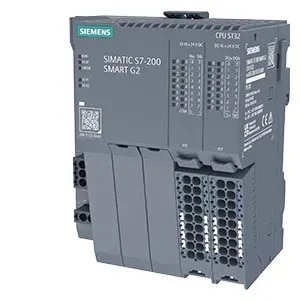
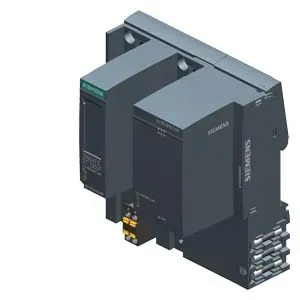
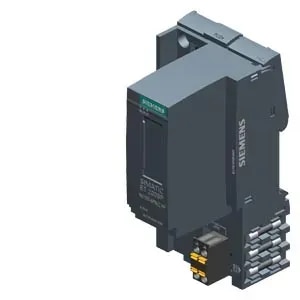
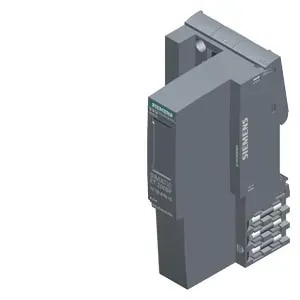
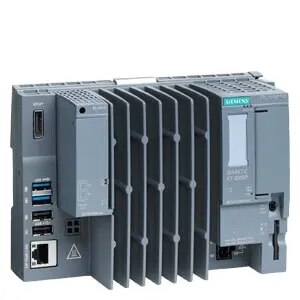
SIMATIC ET 200SP Open Controller, CPU 1515SP PC2 + HMI 2048PT, 8 GB RAM (basic device 6ES7677-2DB40-0AA0), 128 GB CFast with Windows 10 IoT Enterprise LTSC 2019 64-bit, S7-1500 Software Controller CPU 1505SP V2x and WinCC Runtime Advanced V17 preinstalled, with 2048 PowerTags license; interfaces: 1x slot CFast, 1x slot SD/MMC, 1x connection for ET 200SP BusAdapter PROFINET, 1x 10/100/1000 Mbps Ethernet, 2x USB 3.0, 2x USB 2.0, 1x DisplayPort; documentation on CFast,
General information
Product type designation CPU 1515SP PC2
HW functional status from FS04
Firmware version V21.9
Engineering with
● STEP 7 TIA Portal configurable/integrated from version V17
Installed software
● Visualization WinCC Runtime Advanced V17
● Control S7-1500 Software Controller CPU 1505SP
Configuration control
via dataset Yes
Control elements
Mode selector switch 1
Supply voltage
Rated value (DC) 24 V
permissible range, lower limit (DC) 19.2 V
permissible range, upper limit (DC) 28.8 V
Reverse polarity protection Yes
Mains buffering
● Mains/voltage failure stored energy time 5 ms
Input current
Current consumption (rated value) 1.8 A; Full processor load, incl. ET 200SP modules and using USB
Current consumption (in no-load operation), typ. 0.5 A
Current consumption, max. 2.9 A
I²t 0.426 A²·s; with starting current inrush
Power
Active power input, max. 43 W; incl. ET 200SP modules and using USB
Infeed power to the backplane bus 8.75 W
Power loss
Power loss, typ. 15 W; without ET 200SP modules and without using USB
Processor
Processor type Intel Atom E3940, 1.6 GHz, 4 cores
Storage
Type of memory DDR3L
Main memory 8 GB RAM
CFast memory card Yes; 128 GB flash memory
SIMATIC memory card required No
Work memory
● integrated (for program) 1 Mbyte
● integrated (for data) 5 Mbyte
● integrated (for CPU function library of CPU Runtime) 20 Mbyte
Load memory
● integrated (on PC mass storage) 320 Mbyte
Backup
● with UPS Yes; all memory areas declared retentive
● with non-volatile memory Yes
CPU-blocks
Number of elements (total) 6 000; In addition to blocks such as DBs, FBs and FCs, UDTs, global constants, etc. are also regarded as elements
DB
● Number, max. 5 999; Number range: 1 to 65535
● Size, max. 5 Mbyte
FB
● Number, max. 5 998; Number range: 1 to 65535
● Size, max. 1 024 kbyte
FC
● Number, max. 5 999; Number range: 1 to 65535
● Size, max. 1 024 kbyte
OB
● Size, max. 1 024 kbyte
● Number of free cycle OBs 100
● Number of time alarm OBs 20
● Number of delay alarm OBs 20
● Number of cyclic interrupt OBs 20
● Number of process alarm OBs 50
● Number of DPV1 alarm OBs 3
● Number of isochronous mode OBs 1
● Number of technology synchronous alarm OBs 2
● Number of startup OBs 100
● Number of asynchronous error OBs 4
● Number of synchronous error OBs 2
● Number of diagnostic alarm OBs 1
Nesting depth
● per priority class 24
Counters, timers and their retentivity
S7 counter
● Number 2 048
Retentivity
— can be set Yes
IEC counter
● Number Any (only limited by the main memory)
Retentivity
— can be set Yes
S7 timer
● Number 2 048
Retentivity
— adjustable Yes
IEC timer
● Number Any (only limited by the main memory)
Retentivity
— can be set Yes
Data areas and their retentivity
Retentive data area (incl. timers, counters, flags), max. 410 kbyte; For storage in NVRAM; for storage in mass storage 5 242 020 bytes
Flag
● Size, max. 16 kbyte
● Number of clock memories 8; 8 clock memory bit, grouped into one clock memory byte
Data blocks
● Retentivity adjustable Yes
● Retentivity preset No
Local data
● per priority class, max. 64 kbyte; max. 16 KB per block
Address area
Number of IO modules 8 192
I/O address area
● Inputs 32 kbyte; All inputs are in the process image
● Outputs 32 kbyte; All outputs are in the process image
Subprocess images
● Number of subprocess images, max. 32
Hardware configuration
Integrated power supply Yes
Number of distributed IO systems 20
Number of DP masters
● via CM 1
Number of IO Controllers
● via PC interfaces 1
Rack
● Modules per rack, max. 64; CPU 1515SP PC + 64 modules + server module
● Quantity of operable ET 200SP modules, max. 64
● Quantity of operable ET 200AL modules, max. 16
● Number of lines, max. 1
PtP CM
● Number of PtP CMs the number of connectable PtP CMs is only limited by the number of available slots
Time of day
Clock
● Type Hardware clock
● Hardware clock (real-time) Yes; Resolution: 1 s
● Backup time 6 wk; At 40 °C ambient temperature, typically
● Deviation per day, max. 10 s; Typ.: 2 s
Clock synchronization
● supported Yes
● to DP, master Yes
● on Ethernet via NTP Yes
● on Windows clock, device Yes
Interfaces
Number of industrial Ethernet interfaces 2
Number of PROFINET interfaces 1
Number of PROFIBUS interfaces 1
Number of RS 485 interfaces 1; Via CM DP module
Number of USB interfaces 4; 2x USB 2.0, 2x USB 3.0 on front side
Number of SD card slots 1
Video interfaces
● Graphics interface 1x DisplayPort
1. Interface
Interface type PROFINET
automatic detection of transmission rate Yes
Autonegotiation Yes
Autocrossing Yes
Number of connections 88
Interface types
● RJ 45 (Ethernet) Yes; Via BusAdapter BA 2x RJ45
— Transmission rate, max. 100 Mbit/s
— Industrial Ethernet status LED Yes
● Number of ports 2
● integrated switch Yes
● BusAdapter (PROFINET) Yes; compatible BusAdapters: BA 2x RJ45, BA 2x M12, BA 2x FC, BA 2x LC, BA LC/RJ45, BA LC/FC, BA 2x SCRJ, BA SCRJ/RJ45, BA SCRJ/FC,
Protocols
● IP protocol Yes; IPv4
● PROFINET IO Controller Yes
● PROFINET IO Device Yes
● SIMATIC communication Yes
● Open IE communication Yes; Optionally also encrypted
● Web server Yes
PROFINET IO Controller
Services
— Isochronous mode Yes
— shortest clock pulse 500 µs
— IRT Yes
— Dynamic Frame Packing (DFP) No
— PROFIenergy Yes
— Prioritized startup Yes; max. 32 PROFINET devices; if you want to use the “Prioritized startup” functionality in STEP 7 for the PROFINET interface of the CPU, the CPU and the device must be separated by means of a switch (e.g. SCALANCE X205)
— Number of connectable IO Devices, max. 128
— Of which IO devices with IRT, max. 64
— of which in line, max. 64
— Number of connectable IO Devices for RT, max. 128
— of which in line, max. 128
— Number of IO Devices that can be simultaneously activated/deactivated, max. 8
— IO Devices changing during operation (partner ports), supported Yes
— Number of IO Devices per tool, max. 8
— Updating times The minimum value of the update time also depends on communication share set for PROFINET IO, on the number of IO devices, and on the quantity of configured user data
Update time for IRT
— for send cycle of 500 µs 500 µs to 8 ms
— for send cycle of 1 ms 1 ms to 16 ms
— for send cycle of 2 ms 2 ms to 32 ms
— for send cycle of 4 ms 4 ms to 64 ms
— With IRT and parameterization of “odd” send cycles Update time = set “odd” send clock (any multiple of 125 µs: 625 µs ... 3 875 µs) minimum cycle time start from 500 µs
Update time for RT
— for send cycle of 500 µs 500 µs to 256 ms
— for send cycle of 1 ms 1 ms to 512 ms
— for send cycle of 2 ms 2 ms to 512 ms
— for send cycle of 4 ms 4 ms to 512 ms
Address area
— Inputs, max. 8 kbyte
— Outputs, max. 8 kbyte
PROFINET IO Device
Services
— Isochronous mode No
— shortest clock pulse 500 µs
— IRT Yes
— Dynamic Frame Packing (DFP) No
— PROFIenergy Yes
— Prioritized startup Yes
— Shared device Yes
— Number of IO Controllers with shared device, max. 4
— Asset management record Yes
2. Interface
Interface type Integrated Ethernet interface
automatic detection of transmission rate Yes
Autonegotiation Yes
Autocrossing Yes
Interface types
● RJ 45 (Ethernet) Yes; Integrated
— Transmission rate, max. 1 000 Mbit/s
— Industrial Ethernet status LED No
● Number of ports 1
3. Interface
Interface type PROFIBUS with CM DP
Number of connections 44
Interface types
● RS 485 Yes
Protocols
● PROFIBUS DP master Yes
● PROFIBUS DP device Yes
● SIMATIC communication Yes
PROFIBUS DP master
● max. number of DP devices 125
Services
— Equidistance No
— Isochronous mode No
Address area
— Inputs, max. 8 kbyte
— Outputs, max. 8 kbyte
Interface types
RS 485
● Transmission rate, max. 12 Mbit/s
Protocols
PROFIsafe No
Number of connections
● Number of connections, max. 88
● Number of connections reserved for ES/HMI/web 10
● Number of S7 routing paths 16
Redundancy mode
● PROFINET system redundancy (S2) No
● PROFINET system redundancy (R1) No
Media redundancy
— MRP Yes
— MRP interconnection, supported Yes
— MRPD Yes
— Switchover time on line break, typ. 200 ms
— Number of stations in the ring, max. 50
SIMATIC communication
● PG/OP communication Yes
● S7 routing Yes
● S7 communication, as server Yes
● S7 communication, as client Yes
● User data per job, max. 64 kbyte; BSEND/BRCV: 64 KB; PUT/GET: 960 bytes
Open IE communication
● TCP/IP Yes
— Data length, max. 64 kbyte
● ISO-on-TCP (RFC1006) Yes
— Data length, max. 64 kbyte
● UDP Yes
— Data length, max. 2 048 byte
● SNMP Yes
● DCP Yes
● LLDP Yes
Web server
● HTTP Yes; Via Windows and PROFINET interface
● HTTPS Yes; Via Windows and PROFINET interface
OPC UA
● Runtime license required Yes; “Small” license required
● OPC UA Client Yes; From SW CPU 1505SP V2.6
● OPC UA Server Yes; Data access (read, write, subscribe), runtime license required
— Application authentication Yes; Available security policies: None, Basic128Rsa15, Basic256Rsa15, Basic256Sha256
— Security policies Yes; Available security policies: None, Basic128Rsa15, Basic256Rsa15, Basic256Sha256
— User authentication Yes; “anonymous” or by user name & password
Further protocols
● MODBUS Yes; MODBUS TCP
S7 message functions
Number of login stations for message functions, max. 32
Program alarms Yes
Number of configurable program messages, max. 10 000
Number of simultaneously active program alarms 1 000
● Number of program alarms 1 000
● Number of alarms for system diagnostics 200
● Number of alarms for motion technology objects 160
Test commissioning functions
Joint commission (Team Engineering) Yes; Parallel online access possible for up to 8 engineering systems
Status block Yes; up to 8 simultaneously
Single step No
Number of breakpoints 8
Status/control
● Status/control variable Yes
● Variables Inputs, outputs, memory bits, DB, times, counters
● Number of variables, max.
— of which status variables, max. 200
— of which control variables, max. 200
Forcing
● Forcing Yes
● Forcing, variables Inputs, outputs
● Number of variables, max. 200
Diagnostic buffer
● present Yes
● Number of entries, max. 1 000
— of which powerfail-proof 300
Traces
● Number of configurable Traces 4
● Memory size per trace, max. 512 kbyte
Interrupts/diagnostics/status information
Diagnostics indication LED
● RUN/STOP LED Yes
● ERROR LED Yes
● MAINT LED Yes
Supported technology objects
Motion Control Yes; Note: The number of technology objects affects the cycle time of the PLC program; selection guide via the TIA Selection Tool
● Number of available Motion Control resources for technology objects 2 400
● Required Motion Control resources
— per speed-controlled axis 40; per axis
— per positioning axis 80; per axis
— per synchronous axis 160; per axis
— per external encoder 80; per external encoder
— per output cam 20; per cam
— per cam track 160; per cam track
— per probe 40; per probe
● Positioning axis
— Number of positioning axes at motion control cycle of 4 ms (typical value) 15
— Number of positioning axes at motion control cycle of 8 ms (typical value) 30
Controller
● PID_Compact Yes; Universal PID controller with integrated optimization
● PID_3Step Yes; PID controller with integrated optimization for valves
● PID-Temp Yes; PID controller with integrated optimization for temperature
Counting and measuring
● High-speed counter Yes
Standards, approvals, certificates
CE mark Yes
CSA approval Yes
cULus Yes
FM approval Yes
RCM (formerly C-TICK) Yes
Ecological footprint
● environmental product declaration Yes
Global warming potential
— global warming potential, (total) [CO2 eq] 432 kg
— global warming potential, (during production) [CO2 eq] 73.8 kg
— global warming potential, (during operation) [CO2 eq] 365 kg
— global warming potential, (after end of life cycle) [CO2 eq] -6.71 kg