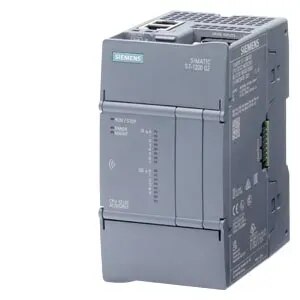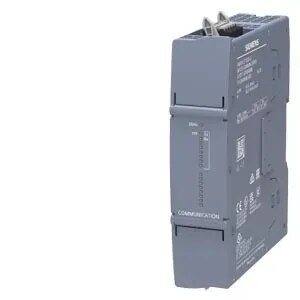
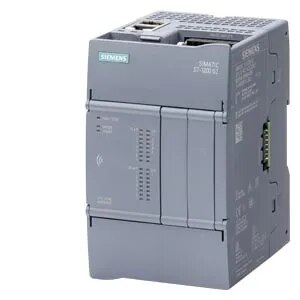
Description
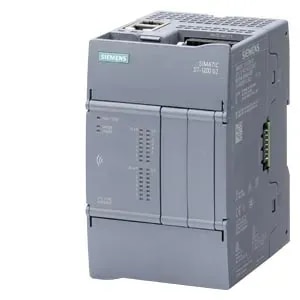
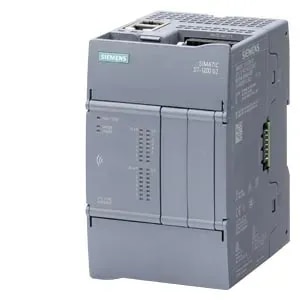
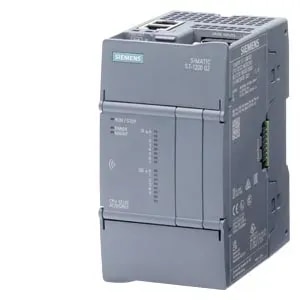
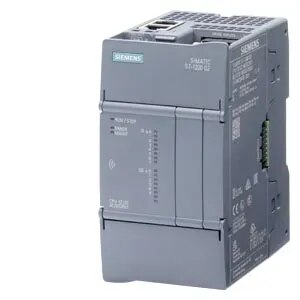
SIMATIC S7-1200 G2: compact CPU 1214C DC/DC/DC; power supply: DC 20.4-28.8 V DC; onboard I/O: 14x DI 24 V DC; 10 DO 24 V DC; memory: program 250 KB data: 750 KB, retentivity: 20 KB
General information
Product type designation CPU 1214C DC/DC/DC
Firmware version V4.1
● FW update possible Yes
Product function
● I&M data Yes; I&M0 to I&M3
● Isochronous mode Yes; For PROFINET only
● SysLog Yes
Engineering with
● Programming package STEP 7 V21 or higher
Supply voltage
Rated value (DC)
● 24 V DC Yes
permissible range, lower limit (DC) 20.4 V
permissible range, upper limit (DC) 28.8 V
Reverse polarity protection Yes
Input current
Current consumption (rated value) 145 mA; CPU only
Current consumption, max. 1 000 mA; CPU with all expansion modules
Inrush current, max. 12 A; at 28.8 V DC
I²t 0.5 A²·s
Output current
for backplane bus (5 V DC), max. 1 600 mA; Max. 5 V DC for SM and CM
Encoder supply
24 V encoder supply
● 24 V Yes; L+ minus 4 V DC min.
● Short-circuit protection Yes
● Output current, max. 400 mA
Power loss
Power loss, typ. 3.5 W
Storage
Work memory
● Integrated 1 000 kbyte
● integrated (for program) 250 kbyte
● integrated (for data) 750 kbyte
Load memory
● Integrated 8 Mbyte
● Plug-in (SIMATIC Memory Card), max. 32 Gbyte; with SIMATIC memory card
Backup
● present Yes
● maintenance-free Yes
● Without battery Yes
CPU processing times
for bit operations, typ. 37 ns; / instruction
for word operations, typ. 30 ns; / instruction
for floating point arithmetic, typ. 74 ns; / instruction
CPU-blocks
Number of elements (total) 4 000; Blocks (OB, FB, FC, DB) and UDTs
OB
● Number of free cycle OBs 100
● Number of time alarm OBs 20
● Number of delay alarm OBs 20
● Number of cyclic interrupt OBs 20; with minimum OB 3x cycle of 1 ms
● Number of process alarm OBs 50
● Number of DPV1 alarm OBs 3
● Number of isochronous mode OBs 1
● Number of startup OBs 100
● Number of asynchronous error OBs 4
● Number of synchronous error OBs 2
● Number of diagnostic alarm OBs 1
Data areas and their retentivity
Retentive data area (incl. timers, counters, flags), max. 20 kbyte
Flag
● Size, max. 8 kbyte; Size of bit memory address area
Local data
● per priority class, max. 64 kbyte; max. 16 KB per block
Address area
I/O address area
● Inputs 1 kbyte; All inputs are in the process image
● Outputs 1 kbyte; All outputs are in the process image
Process image
● Inputs, adjustable 1 kbyte
● Outputs, adjustable 1 kbyte
Hardware configuration
Number of modules per system, max. 10
● number of expansion boards (SB, CB, BB) 2
● number of signal modules (SM) 10; depends on the number of CMs
● number of communications modules (CM) 3
Time of day
Clock
● Hardware clock (real-time) Yes
● Backup time 480 h; Typical
● Deviation per day, max. 2 s; at 25 °C
Clock synchronization
● on Ethernet via NTP Yes
Digital inputs
Number of digital inputs 14; Integrated
● of which inputs usable for technological functions 8; HSC (High Speed Counting)
Sourcing/sinking input Yes
Number of simultaneously controllable inputs
all mounting positions
— up to 40 °C, max. 14
Input voltage
● Rated value (DC) 24 V
● for signal “0” 5 V DC or 0.5 mA
● for signal “1” 15 V DC at 2.5 mA
Input delay (for rated value of input voltage)
for standard inputs
— Parameterizable 0.1 / 0.2 / 0.4 / 0.8 / 1.6 / 3.2 / 6.4 / 10.0 / 12.8 / 20.0 μs; 0.05 / 0.1 / 0.2 / 0.4 / 0.8 / 1.6 / 3.2 / 6.4 / 10.0 / 12.8 / 20.0 ms
— at “0” to “1”, min. 0.1 µs
— at “0” to “1”, max. 20 µs
for interrupt inputs
— Parameterizable Yes
for technological functions
— Parameterizable single phase: 6 HSCs @ 100 kHz & 2 standard @ 30 kHz, quadrature phase: 6 HSCs @ 80 kHz & 2 standard @ 20 kHz
Cable length
● shielded, max. 500 m; 50 m for technological functions
● unshielded, max. 300 m; for technological functions: No
Digital outputs
Number of digital outputs 10; 20 kHz or 100 kHz
● of which high-speed outputs 4; 100 kHz (Qa.0 - Qa.3)
Limitation of inductive shutdown voltage to L+ (-40 V)
Switching capacity of the outputs
● with resistive load, max. 0.5 A
● on lamp load, max. 5 W
Output voltage
● for signal “0”, max. 0.1 V; with 10 kOhm load
● for signal “1”, min. 20 V
Output current
● for signal “1” rated value 0.5 A
● for signal “0” residual current, max. 10 µA
Output delay with resistive load
● “0” to “1”, max. 1 µs; of the pulse outputs (Qa.0 to Qa.3), max. 1.0 µs; of the standard outputs (Qa.4 to Qb.1), max. 50 µs;
● “1” to “0”, max. 3 µs; of the pulse outputs (Qa.0 to Qa.3), max. 3.0 µs; of the standard outputs (Qa.4 to Qb.1), max. 200 µs;
Switching frequency
● of the pulse outputs, with resistive load, max. 100 kHz; 100 kHz max. (Qa.0 - Qa.3), 20 kHz max. (Qa.4 to Qb.1)
Relay outputs
● Number of relay outputs 0
Cable length
● shielded, max. 500 m
● unshielded, max. 150 m
Analog inputs
Number of analog inputs 0
Analog outputs
Number of analog outputs 0
Encoder
Connectable encoders
● 2-wire sensor Yes
Interfaces
Number of PROFINET interfaces 1
1. Interface
Interface type PROFINET
Isolated Yes
automatic detection of transmission rate Yes
Autonegotiation Yes
Autocrossing Yes
Interface types
● RJ 45 (Ethernet) Yes; X1
— Transmission rate, max. 100 Mbit/s
● Number of ports 2
● integrated switch Yes
Protocols
● IP protocol Yes; IPv4
● PROFINET IO Controller Yes
● PROFINET IO device Yes
● SIMATIC communication Yes
● Open IE communication Yes; Optionally also encrypted
● Web server Yes
● Media redundancy Yes
PROFINET IO Controller
● Transmission rate, max. 100 Mbit/s
Services
— PG/OP communication Yes; encryption with TLS V1.3 pre-selected
— Isochronous mode Yes
— IRT Yes
— Dynamic Frame Packing (DFP) Yes
— PROFIenergy Yes; per user program
— Prioritized startup Yes
— Number of IO devices with prioritized startup, max. 16
— Number of connectable IO Devices, max. 31
— Of which IO devices with IRT, max. 31
— Number of connectable IO Devices for RT, max. 31
— of which in line, max. 31
— Number of IO Devices that can be simultaneously activated/deactivated, max. 8
— Updating time The minimum value of the update time also depends on the communication component set for PROFINET IO, on the number of IO devices and the quantity of configured user data.
Update time for IRT
— for send cycle of 1 ms 1 ms to 16 ms
— for send cycle of 2 ms 2 ms to 32 ms
— for send cycle of 4 ms 4 ms to 64 ms
Update time for RT
— for send cycle of 1 ms 1 ms to 512 ms
— for send cycle of 2 ms 2 ms to 512 ms
— for send cycle of 4 ms 4 ms to 512 ms
PROFINET IO Device
Services
— PG/OP communication Yes; encryption with TLS V1.3 pre-selected
— Isochronous mode No
— IRT Yes
— Dynamic Frame Packing (DFP) No
— PROFIenergy Yes; per user program
— Prioritized startup Yes
— Shared device Yes
— Number of IO Controllers with shared device, max. 2
— Asset management record Yes
Protocols
PROFINET IO Yes
PROFIsafe No
PROFIBUS No
OPC UA Yes; OPC UA Server
AS-Interface No
Protocols (Ethernet)
● TCP/IP Yes
● DHCP Yes
● SNMP Yes
● DCP Yes
● LLDP Yes
Number of connections
● Number of connections, max. 128; via integrated interfaces of the CPU and connected CPs / CMs
● Number of connections reserved for ES/HMI/web 10
● Number of connections via integrated interfaces 88
● Number of S7 routing paths 16
Redundancy mode
● PROFINET system redundancy (S2) No
● PROFINET system redundancy (R1) No
Media redundancy
— MRP Yes; as MRP redundancy manager and/or MRP client
— MRP interconnection, supported Yes
— MRPD Yes; Requirement: IRT
— Number of stations in the ring, max. 50
SIMATIC communication
● PG/OP communication Yes; encryption with TLS V1.3 pre-selected
● S7 routing Yes
● S7 communication, as server Yes
● S7 communication, as client Yes; only PUT/GET
● User data per job, max. See online help (S7 communication, user data size)
Open IE communication
● TCP/IP Yes
— Data length, max. 64 kbyte
— several passive connections per port, supported Yes
● ISO-on-TCP (RFC1006) Yes
— Data length, max. 64 kbyte
● UDP Yes
— Data length, max. 2 kbyte; 1 472 bytes for UDP broadcast
● DHCP Yes
● DNS Yes
● SNMP Yes
● DCP Yes
● LLDP Yes
● encryption Yes; Optional
Web server
● supported Yes
● HTTPS Yes
● web API Yes
— Number of sessions, max. 30
— HTTP request body, max. 131 072 byte
● User-defined websites Yes
OPC UA
● Runtime license required Yes; “Basic” license required
● OPC UA Server Yes; data access (read, write, subscribe), method call, runtime license required
— Application authentication Yes
— Security policies available security policies: None, Basic128Rsa15, Basic256Rsa15, Basic256Sha256, Aes128Sha256RsaOaep, Aes256Sha256RsaPss
— User authentication “anonymous” or by user name & password
— Number of sessions, max. 10
— Number of subscriptions per session, max. 5
— Sampling interval, min. 100 ms
— Publishing interval, min. 200 ms
— Number of server methods, max. 20
— Number of monitored items, recommended max. 1 000
— Number of server interfaces, max. 2
— Number of nodes for user-defined server interfaces, max. 2 000
Further protocols
● MODBUS Yes; MODBUS RTU/TCP
Communication functions
S7 communication
● supported Yes
● as server Yes
● As client Yes
● User data per job, max. See online help (S7 communication, user data size)
Number of connections
● overall PG Connections: 4 reserved; HMI Connections: 4 reserved / 82 max; S7 Connections: 78 max; Open User Connections: 78 max; Web Connections: 2 reserved / 80 max; Total Connections: 10 reserved / 88 max
S7 message functions
Number of login stations for message functions, max. 32
number of subscriptions, max. 250
number of tags/attributes for subscriptions, max. 2 000
Program alarms Yes
Number of configurable program messages, max. 5 000
Number of loadable program messages in RUN, max. 2 500
Number of simultaneously active program alarms
● Number of program alarms 600
● Number of alarms for system diagnostics 100
● Number of alarms for motion technology objects 160
Test commissioning functions
Status block Yes; Up to 8 simultaneously (in total across all ES clients)
Single step No
Profiling Yes
Status/control
● Status/control variable Yes
● Variables Inputs/outputs, memory bits, DBs, distributed I/Os, timers, counters
● Number of variables, max.
— of which status variables, max. 200; per job
— of which control variables, max. 200; per job
Forcing
● Forcing Yes
● Forcing, variables Peripheral inputs/outputs
● Number of variables, max. 200
Diagnostic buffer
● present Yes
● Number of entries, max. 500
— of which powerfail-proof 100
Traces
● Number of configurable Traces 4
● Memory size per trace, max. 512 kbyte
Interrupts/diagnostics/status information
Diagnostics indication LED
● RUN/STOP LED Yes
● ERROR LED Yes
● MAINT LED Yes
Supported technology objects
Motion Control Yes
● Number of available Motion Control resources for technology objects 800
● Required Motion Control resources
— per speed-controlled axis 40
— per positioning axis 80
— per synchronous axis 160
— per external encoder 80
— per output cam 20
— per cam track 160
— per probe 40
● Number of available Extended Motion Control resources for technology objects 40
● Required Extended Motion Control resources
— per cam (1 000 points and 50 segments) 2
— for each set of kinematics 30
● kinematics functions
— kinematics with up to 4 interpolating axes Yes
— kinematics with 5 or more interpolating axes No
— user-defined kinematics No
— SIMATIC Safe Kinematics No
● Positioning axis
— Number of positioning axes at motion control cycle of 4 ms (typical value) 10
— Number of positioning axes at motion control cycle of 8 ms (typical value) 10
Integrated Functions
Counter Yes
● Number of counters 8
● Counting frequency, max. 100 kHz; Ia.0 to Ia.5: 100 kHz (80 kHz in quadrature mode), Ia.6 to Ib.5: 30 kHz (20 kHz in quadrature mode)
Frequency measurement Yes
controlled positioning Yes
Number of position-controlled positioning axes, max. 8
Number of positioning axes via pulse-direction interface Up to 4 with SB 1222
PID controller Yes
Number of pulse outputs 8; individually assigned to CPU and Signal Board
Limit frequency (pulse) 100 kHz
Potential separation
Potential separation digital inputs
● Potential separation digital inputs Yes; field side to logic: 707 V DC (type test)
● between the channels No
● Number of potential groups 1
Potential separation digital outputs
● Potential separation digital outputs Yes
● between the channels No
● Number of potential groups 1
EMC
Interference immunity against discharge of static electricity
● Interference immunity against discharge of static electricity acc. to IEC 61000-4-2 Yes
— Test voltage at air discharge 8 kV
— Test voltage at contact discharge 6 kV
Interference immunity to cable-borne interference
● Interference immunity on supply lines acc. to IEC 61000-4-4 Yes
● Interference immunity on signal cables acc. to IEC 61000-4-4 Yes
Interference immunity against voltage surge
● Interference immunity on supply lines acc. to IEC 61000-4-5 Yes
Interference immunity against conducted variable disturbance induced by high-frequency fields
● Interference immunity against high-frequency radiation acc. to IEC 61000-4-6 Yes
Emission of radio interference acc. to EN 55 011
● Limit class A, for use in industrial areas Yes; Group 1
● Limit class B, for use in residential areas Yes; When appropriate measures are used to ensure compliance with the limits for Class B according to EN 55011
Degree and class of protection
IP degree of protection IP20
Standards, approvals, certificates
Siemens Eco Profile (SEP) Siemens EcoTech
CE mark Yes
UL approval Yes
cULus Yes
FM approval No
RCM (formerly C-TICK) Yes
KC approval Yes
Marine approval Yes
Ecological footprint
● environmental product declaration Yes; type 2 acc. to ISO 14021
Global warming potential
— global warming potential, (total) [CO2 eq] 68 kg
— global warming potential, (during production) [CO2 eq] 14.4 kg
— global warming potential, (during operation) [CO2 eq] 54.2 kg
— global warming potential, (after end of life cycle) [CO2 eq]